Advertisement
Supported by
Why Not Just Tell Everyone to Wear Masks?
The C.D.C.’s advice about masking up again was not easy to parse. Some experts think simpler would have been better.
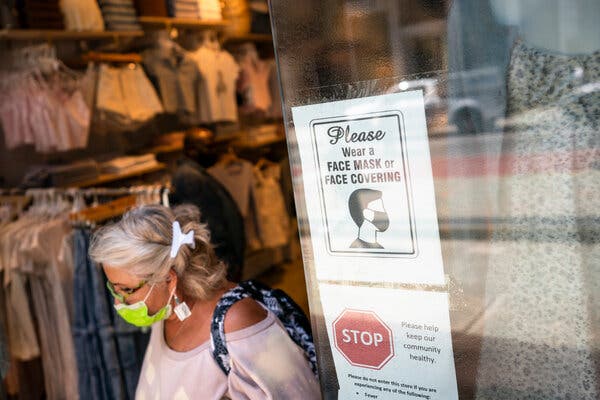

An internal presentation circulated within the Centers for Disease Control and Prevention last month, and eventually obtained by news organizations, offered clear advice for countering the contagious Delta variant: “Given higher transmissibility and current vaccine coverage, universal masking is essential.”
But the recommendation issued by the agency was considerably more nuanced, advising Americans, vaccinated or not, to wear masks in indoor public settings in areas with “substantial” or “high” virus transmission.
At the time, that included at least 80 percent of Americans. As infection rates soar, some experts are now wondering: Would it have made more sense just to call for everyone to mask up?
“Given the rising rates across the country, the clearer message would be, ‘In all parts of the country, wear a mask in public indoor settings,’” said David Michaels, professor of environmental and occupational health at the Milken Institute of Public Health at George Washington University.
In addition to Americans in Covid-19 hot spots, C.D.C. officials also recommended universal indoor masking for teachers, staff, students and visitors to schools, regardless of where they are and regardless of individual vaccination status.
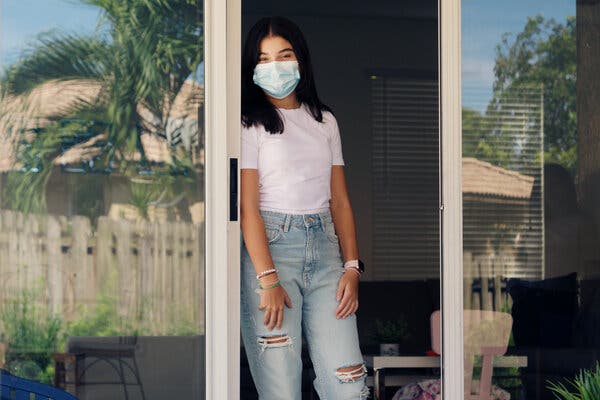
And the agency suggested that people “might choose to mask regardless of the level of transmission” if they or someone in their household were immunocompromised or at increased risk for severe disease — or unvaccinated, a category that includes all children under age 12, who do not qualify for immunization.
transcript
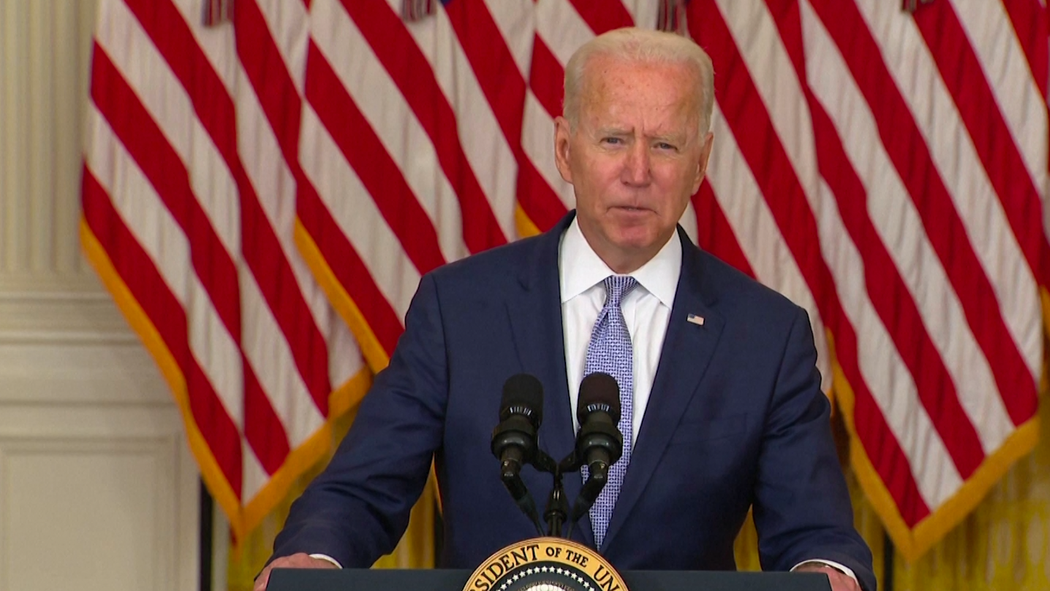
Biden Urges Masks in Schools as Coronavirus Spreads
President Biden urged mask mandates in schools as the coronavirus spreads, particularly the Delta variant, because young children are not yet eligible to be vaccinated yet.
I know there are a lot of people out there trying to turn a public safety measure, that is children wearing masks in school so they can be safe, into a political dispute. And this isn’t about politics, it’s about keeping our children safe. I saw video and reports from Tennessee of protesters threatening doctors and nurses who were before a school board, making the case that to keep kids safe, there should be mandatory masks. And as they walked out, these doctors were threatened. These nurses were threatened. And our health care, workers are heroes. They were the heroes when there was no vaccine. Many of them gave their lives trying to save others, and they’re heroes again with the vaccine. They’re doing their best to care for the people refusing to get vaccinated. And unvaccinated folks are being hospitalized and dying as a result of not being vaccinated. To the mayors, school superintendents, educators, local leaders who are standing up to the governors politicizing mass protection for our kids, thank you. Thank you, as well. Thank God that we have heroes like you, and I stand with you all, and America should as well.
Also on the list: people who are overweight, smoke or have a disability, and anyone who has been in close contact with someone with confirmed or suspected Covid-19. That’s a lot of Americans.
“The messaging from the C.D.C. was less than optimal,” said Dr. Ezekiel Emanuel, vice president for global initiatives at the University of Pennsylvania. “We need to be clear and relatively simple about it.”
Advice on masking from federal health officials has been changing throughout the pandemic. In February 2020, Americans were urged not to buy masks, which were in short supply. In April 2020, officials recommended that masks should be worn outside the home. In May of this year, the C.D.C. said vaccinated people no longer needed to wear masks.
Agency officials did not respond to requests for comment about the latest revised recommendations. But the agency’s director, Dr. Rochelle Walensky, has said she was compelled by early data indicating that the Delta variant had changed the equation and that vaccinated individuals could spread the virus on the rare occasions when they were affected.
A significant piece of evidence emerged from an outbreak in Provincetown, Mass., over the Fourth of July weekend. Nearly a thousand people were infected, the majority of whom were fully vaccinated.
But many Americans have no idea week to week whether they live in a community with substantial or high transmission of the virus.
Latest Updates
The definitions aren’t easy to grasp: Substantial or high transmission means any community where there are at least 50 new infections per 100,000 residents over the previous seven days, or at least 8 percent of tests are positive for infection over that period. (The agency maintains a map.)
A simpler mask recommendation probably wouldn’t have smoothed the way for mandates in a state like Texas, where two state judges this week allowed officials in Dallas County and Bexar County, which includes San Antonio, to begin imposing mask requirements despite an executive order banning them by Gov. Greg Abbott.
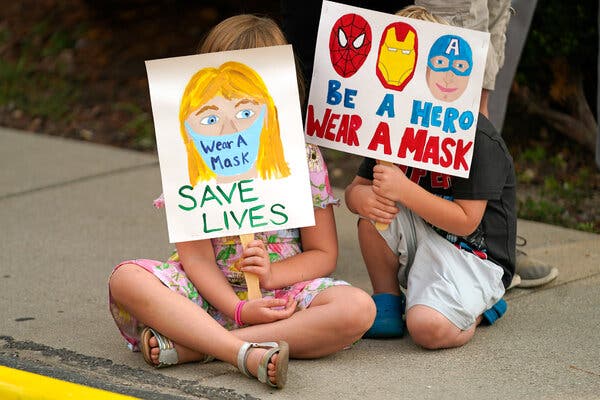
In many communities, mandates are gaining traction, and already the nuances about transmission rates and underlying conditions have been left aside. It’s easy to see why: As of Tuesday, the virus was spreading rapidly in 90 percent of U.S. counties. And masking is swiftly effective.
Masks “are actually amazing, because they work immediately — they start reducing transmission today,” said Julia Raifman, an assistant professor at Boston University’s School of Public Health. “Every case they prevent prevents several other cases, so their effectiveness grows over time.”
Understand the State of Vaccine and Mask Mandates in the U.S.
- Mask rules. The Centers for Disease Control and Prevention in July recommended that all Americans, regardless of vaccination status, wear masks in indoor public places within areas experiencing outbreaks, a reversal of the guidance it offered in May. See where the C.D.C. guidance would apply, and where states have instituted their own mask policies. The battle over masks has become contentious in some states, with some local leaders defying state bans.
- Vaccine rules . . . and businesses. Private companies are increasingly mandating coronavirus vaccines for employees, with varying approaches. Such mandates are legally allowed and have been upheld in court challenges.
- College and universities. More than 400 colleges and universities are requiring students to be vaccinated against Covid-19. Almost all are in states that voted for President Biden.
- Schools. On Aug. 11, California announced that it would require teachers and staff of both public and private schools to be vaccinated or face regular testing, the first state in the nation to do so. A survey released in August found that many American parents of school-age children are opposed to mandated vaccines for students, but were more supportive of mask mandates for students, teachers and staff members who do not have their shots.
- Hospitals and medical centers. Many hospitals and major health systems are requiring employees to get a Covid-19 vaccine, citing rising caseloads fueled by the Delta variant and stubbornly low vaccination rates in their communities, even within their work force.
- New York. On Aug. 3, Mayor Bill de Blasio of New York announced that proof of vaccination would be required of workers and customers for indoor dining, gyms, performances and other indoor situations, becoming the first U.S. city to require vaccines for a broad range of activities. City hospital workers must also get a vaccine or be subjected to weekly testing. Similar rules are in place for New York State employees.
- At the federal level. The Pentagon announced that it would seek to make coronavirus vaccinations mandatory for the country’s 1.3 million active-duty troops “no later” than the middle of September. President Biden announced that all civilian federal employees would have to be vaccinated against the coronavirus or submit to regular testing, social distancing, mask requirements and restrictions on most travel.
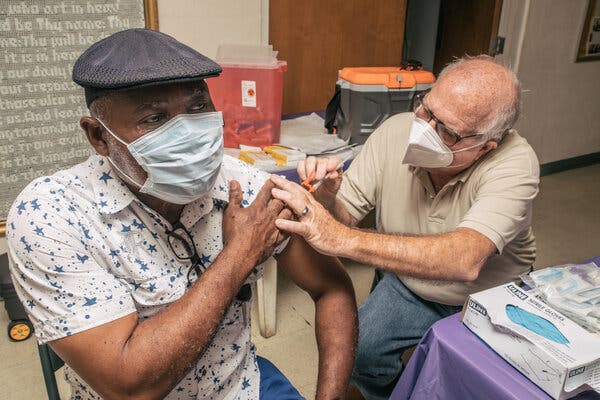
Wearing a mask also helps protect children who can’t be vaccinated yet, and others who are susceptible, like the elderly and those with compromised immune systems, who may not be able to mount a vigorous immune response following vaccination.
Masking also helps to prevent the virus from circulating, reducing the chances that it will mutate, possibly into a form more virulent that may evade vaccines altogether.
“If you allow the virus to freely circulate and not try and stop it, sooner or later there is a likelihood that you will get another variant that could, I’m not saying it will, but could be more problematic than the Delta,” Dr. Anthony Fauci, the nation’s top infectious disease expert, said Sunday on NBC’s “Meet the Press.”
The C.D.C. noted that Black, Hispanic and Native Americans are at higher risk of Covid-19, but said nothing further about minority communities adopting masking measures.
A universal masking recommendation might have helped protect vulnerable communities, including communities of color, where vaccination rates have lagged partly because of mistrust of the medical system and partly because of persistent problems with access to health care, said Dr. Rhea Boyd, a pediatrician who studies the relationship between structural racism and health.
“If you live in a neighborhood where a lot of people are not vaccinated, you are being exposed to the virus a lot,” Dr. Boyd said.
Still, some experts are sympathetic to the fine line that the C.D.C. must tread when issuing changing advice — especially on masking, which has become a cultural and political flash point.
Mask mandates can threaten the livelihoods of restaurants, bars and other indoor venues that serve food. In Louisiana, Gov. John Bel Edwards temporarily reinstated a statewide indoor mask mandate earlier this month amid a surge in cases. But he made an exception for “anyone who is consuming a drink or food.”
By setting localized benchmarks, the agency’s mask recommendation “gives everyone something to look forward to,” said Dr. Carlos del Rio, an infectious disease specialist at the Emory University School of Medicine in Atlanta. “At the end of the day, the C.D.C. is a science agency that responds to politicians.”
Still, he added: “If you’re indoors, you should wear a mask.”










Most Popular
Stephen Colbert Was Disinvited From Obama’s Birthday Party
A Lawyer’s Deathbed Confession About a Sensational 1975 Kidnapping
Can We Ever Look at Titian’s Paintings the Same Way Again?
The March of the Karens
What We Think We Know About Metabolism May Be Wrong
3 Recipes That Changed My Life
Surf Instructor Killed His Children and Claimed QAnon Made Him Do It, F.B.I. Says
Labor-Intensive Vietnamese Cooking in a Summer Short on Labor
Life Is Short. What Are You Going to Do About That?
‘One of You Is a Monster’
Advertisement