Advertisement
Supported by
Farah Stockman
It’s Finally Time to End American Hubris in Afghanistan

Ms. Stockman is a member of the editorial board.
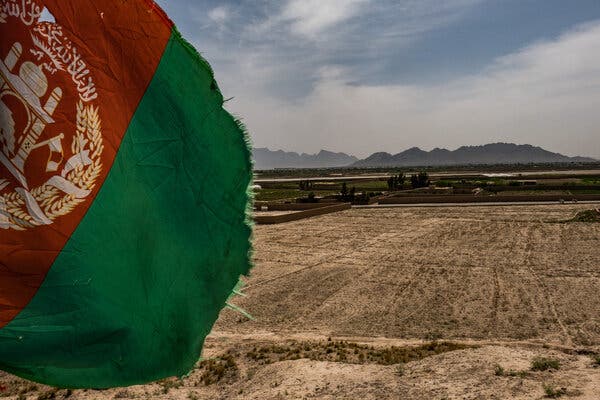
The recent chaotic scenes at the Kabul airport should make one thing painfully clear: We can’t airlift the whole country to some safe haven. Although the United States has a moral responsibility to evacuate the Afghans we put in harm’s way, the most consequential decisions in the days ahead involve how we will help the millions of Afghans who will be left behind and how we will relate to their new leaders.
The Biden administration faces a choice: try to thwart any government the Taliban create or use whatever shred of leverage America has left to encourage them to govern as inclusively and moderately as possible. If we care about the people of Afghanistan, we will try the latter — and do so with as little of the hubris and heavy-handedness that helped get us into this mess in the first place.
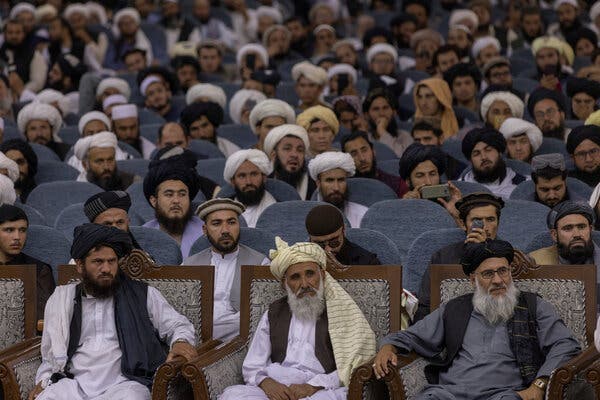
For many ordinary people across Afghanistan, this is a moment of cynicism and even despair about politics and the long game for their country. The sight of Afghan political and military leaders escaping in American planes is a betrayal, plentiful proof of whose bidding they had been doing all along. But not everyone caught a cargo plane out of town. The former Afghan president Hamid Karzai and the longtime leader and chairman of Afghanistan’s National Reconciliation Council, Dr. Abdullah Abdullah, have been sitting down with Taliban leaders in an attempt to form a new and more inclusive government.
It’s far from clear whether they will succeed. Both presided over a government that was famously corrupt. So far, the Western press seems to be portraying their efforts as foolhardy rather than brave. But the people need a way out of their political despair — just as America needs a way out of the spectacle of a great power abandoning the people it had professed to care about. Afghanistan will be far better off with a government that includes non-Taliban figures like Mr. Karzai and Dr. Abdullah who have relationships with American and European leaders, not to mention recent experience running the country. The United States will be better off if talks are successful in forming a stable and inclusive government, an outcome that already faces long odds.
The Taliban might be in no mood for concessions after sweeping the country with relative ease. They appear to be divided about what kind of government they should form. We must not take at face value their promises to govern more moderately than they did in the late 1990s, when they last controlled the country. There are reports of some girls being forced to marry Taliban fighters, and female newscasters on state television were removed from the air. So far, the Taliban have mostly abided by a promise to offer safe passage to Americans who want to leave by the deadline of Aug. 31, but they have begun to block the departure of Afghans, a development that will spark more desperation and panic.
There are still reasons for hope that the Taliban might respond to incentives to moderate their behavior, even if only to gain international recognition and undercut internal opposition.
- Refer your friends to The New York Times.
In a news conference last week, the Taliban spokesman Zabiullah Mujahid promised to protect the rights of women, minorities and the independent press — albeit in the context of Shariah. “There is a huge difference between us now and 20 years ago,” he pledged. In recent days, Taliban fighters did not interfere with a public ceremony of the Shiite religious minority that the Taliban persecuted in the past. A Taliban spokesman allowed himself to be interviewed by a female reporter for a segment aired by Tolo, the country’s largest private broadcaster. The Taliban have met with tribal elders and religious leaders, a sign they understand that in order to govern, they need broader support than they currently have.
The United States has already tried the policy of thwarting the Taliban at every turn. In 2001 the Taliban’s leader and co-founder Mullah Abdul Ghani Baradar attempted to surrender to Mr. Karzai’s forces and demobilize, in exchange for allowing the Taliban spiritual leader Mullah Mohammed Omar to live in dignity in Kandahar. The U.S. defense secretary at the time, Donald Rumsfeld, refused to accept that deal. At the insistence of Americans, the Taliban were bombed and locked up at Guantánamo Bay. It’s hard not to see today’s debacle as a repudiation of the hubris of that era.
What leverage we have left — money — is not insignificant, but it has to be handled with the future of the Afghan people in mind. The Biden administration has frozen the roughly $7 billion that belongs to Afghanistan that sits in the Federal Reserve Bank of New York. The International Monetary Fund has refused to deliver funds that Afghanistan was due to receive to help the country weather Covid. Without international assistance, the salaries of low-level Afghan government workers — teachers, doctors and sanitation crews — will almost certainly not be paid. If the government runs out of funds, the price of food could skyrocket. Unrest will spread.
To be sure, it is impossible to imagine the international community providing aid directly to a Taliban-led government. The Taliban are listed as a terrorist group by the U.S. Treasury and as a “threat to international peace and security” by the United Nations Security Council. But that doesn’t mean we have to sit by and watch economic insecurity spread. Planes that land in Kabul to evacuate Americans and Afghan allies could be filled with humanitarian aid for the United Nations to distribute to the people who are left behind. If we care about Afghanistan, we should lay down some clear conditions under which a new Afghan government could come out from under international sanctions. This is the long game: to leverage money and international recognition to incentivize the Taliban to establish the most inclusive and moderate government possible.
For far too long, Afghanistan has been pulled apart by great powers pursuing their own agendas. In the 1980s, Americans funded Islamist fighters to undermine the Soviet-allied government at the time — setting the stage for the Taliban. For the past 20 years, the United States and its NATO allies have micromanaged the government in Kabul, engineering support for pro-Western policies and leaders. On the sidelines, Afghanistan’s neighbors have backed their own factions. Iran has armed and trained Hazaras, a Shiite minority, who fought in Syria. Pakistan has supported the Afghan Taliban, who have traditionally been Pashtun. Maybe it is finally time for the rest of the world to let Afghans chart their own path and to stop playing spoiler.
It seems to me that even a deeply flawed government in Kabul is preferable to no government at all, as people living in Somalia, Libya or the Democratic Republic of Congo can attest. Somalia is a particularly vivid example of the United States using its power to topple a group that had brought security to a lawless place. Our intervention drove out the Islamic Courts Union, only to leave Somalia at the mercy of an even more extremist group.
In Afghanistan, there are no good options. Americans could use additional sanctions to undermine the Taliban, but sanctions will have limited value unless Afghanistan’s neighbors — especially China, Iran and Pakistan — agree to abide by them. We could covertly arm the Taliban’s opponents. But that would condemn the country to more war or to falling under the sway of ISIS-K, which is considered more dangerous than the Taliban.
The occupation of Afghanistan was based on a flawed logic that people were either with us or against us, that the Islamic world was a swamp that we had to drain and that we had the moral authority and the power to remake an entire region to prevent another terrorist attack on our soil. In the process of all that draining and remaking, we created a whole crop of other terrorists and upended the lives of tens of millions of innocent people.
It is this way of thinking — not just the occupation of Afghanistan — that must end.


The Times is committed to publishing a diversity of letters to the editor. We’d like to hear what you think about this or any of our articles. Here are some tips. And here’s our email: letters@nytimes.com.
Follow The New York Times Opinion section on Facebook, Twitter (@NYTopinion) and Instagram.
Farah Stockman joined the Times editorial board in 2020. For four years, she was a reporter for The Times, covering politics, social movements and race. She previously worked at The Boston Globe, where she won a Pulitzer Prize for commentary in 2016. @fstockman


Editors’ Picks



Most Popular
Searching for Italy at Tom Colicchio’s New Restaurant
A Delicate Dessert That Puts the Whole Lemon to Use
He Passed Out Three Times in 10 Days. What Was Wrong?
That $56,000 Drug? Blame Medicare.
Some Bat Pups Babble Just Like Human Babies
The Stress-Free Way to Hang Art
Tom T. Hall, Country Music’s ‘Storyteller,’ Is Dead at 85
‘Ted Lasso’ Season 2, Episode 5 Recap: Rom-Communism
Even Amid a Crackdown, the Proud Boys Are Still Agitating
With 500th Homer, Cabrera Joins a Club That’s Getting More Exclusive
Advertisement
Comments 134
It’s Finally Time to End American Hubris in AfghanistanSkip to CommentsThe Afghan people do have agency. The Taliban could not have won so easily without widespread support from the people. They are NOT foreigners. They are the children of Afghan parents. Let them chose to live their lives as they wish. Last time I looked, Vietnam is a peaceful place as the people go about their business. None of the dire predictions fifty years ago have panned out.
The Afghan people do have agency. The Taliban could not have won so easily without widespread support from the people. They are NOT foreigners. They are the children of Afghan parents. Let them chose to live their lives as they wish. Last time I looked, Vietnam is a peaceful place as the people go about their business. None of the dire predictions fifty years ago have panned out.
Perhaps if we had fought a war to actually win it, Afghanistan would be in a far better place now and we would have saved billions of dollars and countless lives. Conversely, if military advisers had cautioned American political leadership that there was no way of actually winning a war in Afghanistan, we wouldn't have gone in at all. I won't need to read the view of historians years from now to discover what went wrong for America in Afghanistan. We didn't enter the country to actually secure a military victory. After that, every domino that could fall, in fact, did.

As we withdraw from Afghanistan we still retain the Pentagon and its bloated budget. The Pentagon essentially bribes and cajoles the support of American politicians. There are over 4,000 forts and bases spread across America: jobs, jobs, jobs and supplies of all sorts. Then, the armament industry, with its dispersal across America (for security reasons) increases that effective bribery. Is there anything holding the USA together other than the Senate? And what is holding that together other than the Pentagon budget?
The US gave the timelines for withdrawal. It’s time for other nations to step up and the US forced their idle hands. What’s the problem, the US should not be the world’s police force.

This is no time to fight the last lost war. The Biden administration has to ignore the predictable ignorant outbursts from so called foreign policy experts and the right wing press and media …. and recognise the Taliban as the legitimate rulers. The realpolitik demands it. Those know-nothings who called on the Afghan army and security forces to fight know nothing about Afghanistan or the Taliban. A fight - a full on civil war - would have been a thousand times worse for the people, national infrastructure, security and economy… not to mention the refugee problem, than what we are facing today. Those calling for the Afghan army to defend democracy had also based their calls on intelligence estimates that were not only wildly incorrect, but also showed the Taliban winning eventually, anyway, maybe in 18 months to 2 years’ time. How many Afghans did their intelligence assessments figure would be killed in the meantime by fighting the Taliban? It was a callous call and we should be deeply grateful that the takeover was as peaceful as it was. Now, the West has to recognise the Taliban. It has already done this de facto by negotiating the withdrawal agreement with them and not the puppet former Afghan government. Humanitarian and development aid depends on it. It’s as simple as that. The US regularly makes friends of obnoxious regimes in its interests. Now it must hold its nose and recognise the Taliban. Millions of lives depend on it.

This is a wise article and I hope Joe Biden and our Congresspeople read it. We failed to create a viable alternative to the Taliban in Afghanistan. Given our 20 years of meddling there to create such an alternative and our great failure to do so, we now owe it to the Afghan people to help their country succeed, even if the Taliban will now rule it. If we resort to sanctions and punitive measures out of spite we will only ensure the failure of Afghanistan and therefore ensure that both suffering and extremism persist there. Let's not make the same mistakes we've made in Iraq and Iran. Let's give the Taliban the best possible chance to be better. If they fail, we can abandon our support, but let's not condemn them to failure right from the start by starving them of the funds needed to govern.
In a sense, the Taliban were elected. As Ms. Stockman points out, they swept across "the country with relative ease." I've read that Afghans in the countryside support the Taliban but not so much in the cities. Does that sound familiar? In power now, they seem to have no one in their ranks capable of running a banking system or an airport. They may find other unanticipated challenges in governing. But let's not forget the disdain with which the Taliban views the United States. Ms. Stockman points to our "failures" in Somalia and Congo. Should we now take our lashes and open our wallets? We do have a moral obligation to those who worked beside us and to our fellow human beings. We should've paused before sending the U.S. military into Afghanistan. Maybe we should take a breath, perhaps wait for some message from the Taliban before attempting to fulfill our moral obligation. Get people out, yes, then let's see.
The end of a war, especially a civil conflict, is just the beginning. I think it's hard for people here in the US to understand that. Chaos presents opportunities for ruthless people to become more powerful. Force alone can't create stability. The international players cited here will seek to maximize their advantages. The US can't stop that with our military might. Even our wealth will have limited impact. Public opinion will oppose wise choices. It looks to me as if the Taliban is not a cohesive monolith. The war lords are still around in their spheres of influence. That ISIS-K is an enemy to the Taliban, but there are passionate ideologues within the Taliban who want an extreme Islamic state. I suspect it's impossible to get to a peaceful settlement that minimizes the chaos quickly. It seems likely that was always the case, even as the US responded to 9-11 by invading Afghanistan. Punishing Osama bin Laden may have made sense, but the cost seems to have been too great to justify today. I also think that it's unlikely that the foreign powers will just let it play out. That would be too much to hope for.
We need to reinstitute a military draft, so every family equally bares the cost of going to war. Bone Spurs? Well, that shouldn’t prevent you from driving a truck, in a combat zone.
It's not just Afghanistan. The US remains the most feared nation on the planet with good reason. There is no country on earth -- or very few -- in which we have not interfered. Our long history of interference, of toppling governments, installing brutal dictatorships, training murderous torturing militaries, implementing strangling embargoes and the terror of killer drones does not inspire confidence or respect. Yet, our hubris continues, especially in our press which tries to look for operational errors and to cast blame rather than on our hubris itself. Our media is always ready to spread official false narratives leading to war. The hand-wringing inevitably comes later with nothing learned. The pattern remains intact. Any country who resists our dominance and corporate control; any country that claims ownership if its own territory and minerals will be in the cross-hairs of our violence. Our economy remains dependent on weapons sales and military adventurism even at this precipice of global climate chaos when cooperation and trust are most vital.
One of best articles I have read on why we failed in Afghanistan. The Project for A New American Century and it's Neocon politicians need to ba rooted out from American government. Biden and NATO need to concentrate on the real menaces like Russia, North Korea and Iran. Taliban have learned not to defy the US and will have to learn how to govern inclusively or will not succeed.
In my imagination I see a White House meeting in which people told Mr. Biden we couldn't get out of Afghanistan without causing chaos. He listened attentively and finally, exercising Presidential power, said, "Just get us out, do it without delay and let the chips fall where they may". It's been messy, as predicted, plenty of chips have fallen all over the place, but it was the right decision. I'm no Democrat, but Bravo Mr. Biden!
I keep wondering where the alternative narrative has gone. It goes like this: with 5,000 troupes (far less than our forces in peaceful Germany), we manage to keep the Taliban in their corner. We do need an iron fist of change a corrupt government, and an iron fist to stop money being misused (both huge problems.) But possibly, over time, as Afghans realize a more satisfying lifestyle, they will gain a lower tolerance for a destructive government. This is not an "endless war". This is stabilization looking at the long game. This narrative seems to have been lost in the mayhem of our "end the war" thinking.
I would say ending American hubris in general, both at home and abroad, would be a welcomed change for the better.

"If we care about Afghanistan, we should lay down some clear conditions under which a new Afghan government could come out from under international sanctions." What? So now we should micromanage from afar, using money as leverage now that our troops are leaving? I'm not sure how the American government has any power to "lay down clear conditions" for anything, after 20 years that ended in failure. I'm far from an isolationist, but with all that's going on here at home, we have more than enough crises here to focus on. Ignoring them means we risk accepting the erosion of our own democracy as we continue to fiddle with the political sstems of other countries to expiate our guilt.
If there was ever a time to acknowledge the folly of attempting to impose what purports to be America's view of how the world should be on another country, this is it. That does not mean that we should abandon diplomacy, or even the use of force when it is absolutely needed and has even a reasonable, if not assured, likelihood of success. But realism, rather than egotism, bravado and platitudes about American exceptionalism needs to be given its due. It is a fair question to ask of our nation's leaders that they acknowledge that the my way or the highway nature of America's foreign policy isn't guaranteed success. Edmund Burke, George Santayana and Winston Churchill are variously credited with what Churchill ultimately claimed, that “Those that fail to learn from history are doomed to repeat it.” When will we ever learn?
While hubris plays into the decisions that brought us into Vietnam and Afghanistan I think there's a larger motivator driving this. We've dubbed the men and women who fought the Second World War as "The Greatest Generation". We fought and won a great crusade against a profound evil. Vietnam, in the context of the Cold War and Afghanistan in the context of the "War on Terror were attempts to recreate that great crusade. We tried to define the people of Vietnam and Afghanistan as conquered people and we, like our fathers and grandfathers landing at Normandy were their liberators. It wasn't hubris it was fantasy. I saw that fantasy first hand in Vietnam. We attempted to create and install successive governments that never really had legitimacy among the majority of its people. They descended into blatant corruption and further lost the trust of the people. The 'enemy' weren't invaders, they were fellow citizens. In both Vietnam and Afghanistan we tried to impose an American style democracy that was neither understood or welcome. We've now had exactly the same end both times. We need to stop attempting to recreate the great crusade and we need to stop assuming everyone wants to be just like us.
The major reason for the failure of the US effort in Afghanistan was the interference by Pakistan and Iran, which are the dominant neighbors with strong ethnic connections within Afghanistan. Indeed, the official languages in Afghanistan are Dari (Afghan Persian) and Pashto (the language of the Pakistani Pashtuns). Pakistan has had close relations with the Taliban for decades, with the Taliban having support and sanctuary on both sides of the Pakistani/Afghan border. Osama bin Laden was hiding in plain sight for more than a decade in Pakistan’s Khyber Pashtun province. The government of Pakistan has claimed to be a US ally, but did more to hurt than to help the US in Afghanistan. Iran, of course, did all they could to undermine US efforts. With the US pulling out, the Afghan government has collapsed, and several million refugees will need to leave the country. The US has a moral responsibility to help them relocate.
Why are we still debating now our proven dysfunctional intervention in this confused and dangerous situation in Afghanistan? Even with all of their internal divisions, tribes, religious schisms, they are trying to form a government. We should wake up and be aware of these oh so similar religious and political passions that are shaking us here in the USA, now, at this moment. Since Jan. 6, we too are "in harm's way," trying to form a true government, one that will permit fair voting in our democratic Republic and deliver long-needed benefits to our society, so twisted by gross inequality, lies and prejudice. Time to let go and as they say down here, tend to our own rat-killing or we will find ourselves, some of us, also needing to be airlifted to some safe haven. Is there a safe haven, anywhere?
If the last eight years have taught us anything it is that we are not the the best arbiters of good governance. We have a government that is slowly chipping away at the rights of our women, we have an increasing fundamentalist community who dismisses science and increasingly has diminished the value of education for not only our daughters but our sons as well to the point that we cant even have an honest conversation about how to keep our 1st world children safe from a pandemic. About 30 percent of our citizens now think our election process is a sham and the way to correct the situation is to construct barriers to disenfranchise millions of voters who do not fit the mold of what Americans should look or sound like. We squander our natural resources, and at any given moment our forests are burning, our towns are flooding as simultaneously we are draining or tainting our water supply. Armed vigilantes are now patriots and patriots are now only those who listen a man who thinks that our best days were sixty years ago. We have zero business building nations until we look at how we have sullied and diminished our own.
The hysteria on the right and in much of the press over the chaotic evacuations from Afghanistan has much less to do with the crisis itself than it does with the embarrassing spectacle of U.S. backed government collapsing so quickly. When a government is overthrown by force, chaos, confusion, and often widespread killings are common. Take, for example, the overthrow of Norodom Sihanouk of Cambodia by Pol Pot, which led to hundreds of thousands of deaths. Or perhaps we can recall the chaos of the last days of the South Vietnamese government, where frantic evacuations were dramatically evidenced by the dumping of multimillion dollar helicopters off the decks of ships. As violent regime changes go, the Taliban takeover has been relatively benign. But many in this country who are accustomed to puffing out their chests and boasting about awesome U.S. power can't cope with the stark images of the utter failure of that power to orchestrate events in Afghanistan.

While I think it is fair to blame Afghans for their government (and blame Americans for Trump) - it is high time we stop arming anyone. We armed Africa in the 1960s to counter Soviet influence with consequences that continue till today. We also tried to stop left wing governments in Central American with a similarly terrible result. So we need to simply stop the madness.
My Irish ancestors, having endured 500 years of British colonial powers telling them what to do, would strongly agree that "Maybe it is finally time for the rest of the world to let Afghans chart their own path and to stop playing spoiler."
It was both stunning and cringeworthy to watch the President I love proclaim to the world that the Afghans, through cowardice, are responsible for the Taliban takeover. I understand the politics, with many Americans concurring that it's time to simply wash our hands. Unfortunately for Joe Biden, he'll be dogged and haunted by the imagery of wide-spread human rights abuses, (particularly against women), and the lingering stain of abandoning the heroic Afghans who fought along side of us, who died along side us, and to whom we gave a solemn promise to protect.